How Forgiving Others Affects Your Own Spiritual Healing
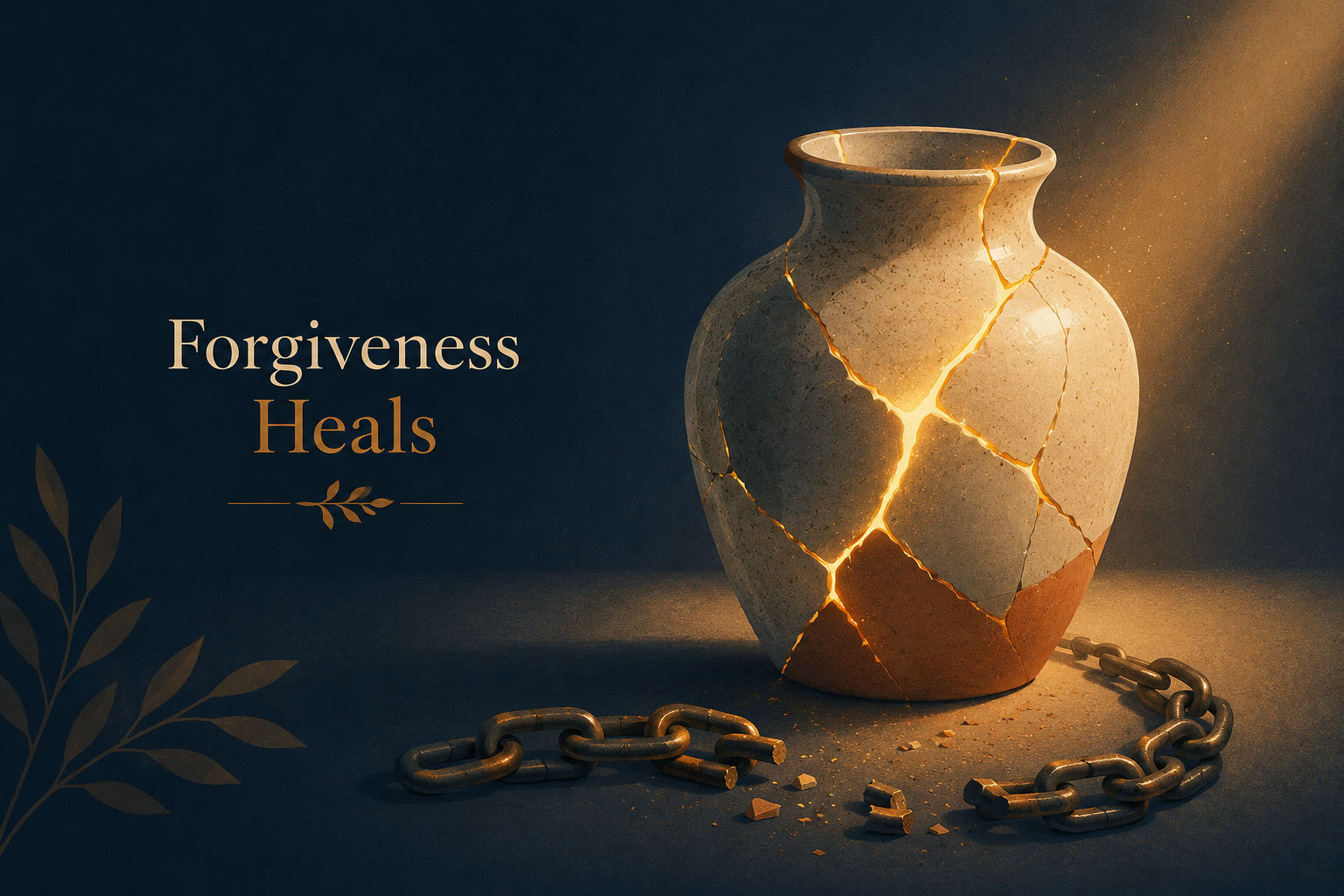
How Forgiving Others Affects Your Own Spiritual Healing
Grace and forgiveness are not the same thing. Treating them as synonyms is one of the most common reasons people feel stuck when they try to heal from a real hurt. If you have ever said the words 'I forgive you' and felt absolutely nothing shift inside you, this is likely why.
Grace is what you receive. Forgiveness is what you extend. The order is not a technicality. It is the entire mechanism. Most people try to skip straight to forgiving someone before they have personally received grace themselves, and then wonder why it feels like pushing a car uphill with no fuel. You cannot give what you have not been given.
Key Takeaways
- Read the biblical accounts of grace and forgiveness in their original context. Look up the Greek words charis and aphiemi in an interlinear Bible to see exactly what the text says, not just what a translation implies.
- Before you try to forgive someone, stop and ask whether you have actually received grace yourself. Sit with a specific passage about God's forgiveness toward you before you attempt to extend it toward anyone else.
- Separate the act of forgiving from the act of reconciling. Write down what you are releasing (the debt, the right to retaliate) and what you are not required to give back (automatic trust, resumed relationship).
- If the wound is still fresh, do not force the feeling. Forgiveness is a decision made repeatedly, not a one-time emotional event. Return to the decision each time the resentment surfaces, and treat each return as progress, not failure.
- Find the biblical figures who modeled this in real, costly situations. Joseph, Stephen, and others left detailed records in Scripture. Study what they actually said and did, not just the summary version.
On this pageGrace and Forgiveness Are Not Synonyms (and the Difference Matters for Your Healing)Why You Have to Receive Grace First Before You Can Genuinely Forgive AnyoneWhat the Bible Actually Says About Grace, Forgiveness, and Healing TogetherHow Forgiving Others Leads to Your Own Spiritual Healing (the Mechanism, Not the Cliche)The Difference Between Mercy, Grace, and Forgiveness (So You Know Which One You Need Right Now)A Concrete First Step When Forgiveness Still Feels Out of ReachWhat Grace and Forgiveness Together Look Like in a Real Relationship
Grace and Forgiveness Are Not Synonyms (and the Difference Matters for Your Healing)
In the original Greek of the New Testament, grace is the word charis, meaning unmerited favor, something given before you do anything to earn it. Forgiveness is aphiemi, meaning to release or let go, as in releasing a debt someone owes you. Two different words. Two different movements. One is a gift you receive; the other is a gift you pass on.
Grace flows toward you from God before you deserve it. Forgiveness flows from you toward the person who hurt you. When you collapse them into one word, you end up trying to manufacture something you were supposed to receive first. That is why forgiveness can feel like a performance rather than a release.
Think of it this way: grace is the supply. Forgiveness is what you spend from that supply toward another person. If the supply is empty, the spending is forced. You can say the right words, but the wound stays exactly where it was.
Start here: before you try to forgive anyone, ask yourself whether you have actually sat with the reality that you yourself have been forgiven a debt you could not pay. That is not a warm-up exercise. That is step one.
Why You Have to Receive Grace First Before You Can Genuinely Forgive Anyone
Ephesians 4:32 says to forgive one another 'just as God in Christ forgave you.' The phrase 'just as' is doing real work there. It is not just a comparison. It is a sequence. His forgiveness of you is both the model and the fuel for your forgiveness of someone else.
When you try to forgive from an empty tank, what you usually produce is suppression. Suppression looks like forgiveness from the outside. You stop bringing up the offense. You act normally around the person. But the wound is stored, not healed. Stored wounds tend to surface later, often sideways, as bitterness, distance, or a low-grade anger you cannot explain.
Here is a concrete scenario: someone is betrayed by a close friend who shared something told in confidence. They say 'I forgive you' because they know they are supposed to. Nothing changes inside. Six months later they still feel a cold anger every time they see that person. That is almost always a sign that grace has not been personally received yet. The words were right; the sequence was skipped.
The practical first step is not to try harder to forgive. It is to stop and absorb the fact that you have been forgiven something enormous. Sit with that before you do anything else. Feeling that debt cancelled in your own life is what creates the capacity to cancel someone else's.
What the Bible Actually Says About Grace, Forgiveness, and Healing Together
Matthew 18:21-35 is the clearest picture of the sequence in Scripture. A servant receives a debt cancellation so large it is almost absurd, then immediately refuses to cancel a tiny debt owed to him. Jesus uses the parable to make a pointed claim: when someone cannot pass on forgiveness, it is a sign the original grace was never truly received. The inability to forgive is diagnostic, not just moral failure.
Luke 7:47 connects love and forgiveness directly to how much a person understands they have been forgiven. The woman who anoints Jesus's feet loves extravagantly because she knows the size of what she has been given. The Pharisee in the same scene cannot see it. The depth of your forgiveness toward others tends to track with the depth of your understanding of your own.
Colossians 3:13 puts it plainly: 'Bear with each other and forgive one another if any of you has a grievance against someone. Forgive as the Lord forgave you.' Again, the model is what you received, not what you can generate on your own.
The word selah in the Psalms is a pause marker, a prompt to stop and absorb what was just said before moving on. Receiving grace requires that same kind of deliberate pause. You cannot rush past it and expect the rest of the sequence to work. If you want to trace the words charis and aphiemi through every verse they appear in, Selah lets you read the interlinear text and search the original Greek across the full Bible, free, with no account required.
How Forgiving Others Leads to Your Own Spiritual Healing (the Mechanism, Not the Cliche)
Forgiveness does not excuse what happened. It releases you from carrying the weight of the verdict. That distinction changes everything about how you approach the act. You are not saying the offense was acceptable. You are saying you are no longer going to be the one holding the sentence over the person's head.
Unforgiveness keeps you in a posture of judgment. That posture is exhausting, and it blocks the same grace you need for your own ongoing wounds. You cannot receive freely while your hands are clenched around someone else's debt.
Stanford's Forgiveness Project found that people trained in forgiveness reported significantly lower levels of hurt, anger, and physical stress symptoms. The body registers forgiveness as relief. This is not metaphor. The tension that comes with sustained resentment is physiological, and releasing it has measurable effects.
One more distinction worth holding: healing is not the same as reconciliation. You can fully forgive someone and still maintain distance from them. Forgiveness is internal. Reconciliation requires two willing people and rebuilt trust. Collapsing them into one expectation creates confusion and sometimes puts you back in harm's way. How forgiving others leads to your own spiritual healing is not a straight line. It is more like a door that opens inward. You push it from your side, and the room on the other side is your own peace.
The Difference Between Mercy, Grace, and Forgiveness (So You Know Which One You Need Right Now)
These three are related but they are not the same act. Mercy means not giving someone the punishment they deserve. Grace means giving someone something good they did not earn. Forgiveness means releasing the debt entirely. You can do one without the others.
A parent who does not punish a child for breaking a rule but still holds a quiet grudge is showing mercy without forgiveness. The consequence is withheld, but the debt is still on the books internally. That is a real and common pattern.
Grace goes further than mercy because it adds something. God does not just withhold judgment. He gives righteousness, peace, and access to Himself. That surplus is what makes genuine forgiveness possible. You are not just letting someone off; you are extending something positive from a supply you have already received.
Here is a practical diagnostic. Ask yourself which one you are actually struggling with right now. Do you want the person to face consequences? That is a mercy question. Do you want to stop feeling the anger? That is a forgiveness question. Do you feel like you have nothing left to give? That is a grace question, meaning you need to receive before you can extend anything outward. Name the right problem before you try to solve it.
A Concrete First Step When Forgiveness Still Feels Out of Reach
Vague forgiveness does not stick. Before you can release a debt, you have to name what was actually taken. Trust. Safety. Time. Reputation. A specific relationship. Get specific, because you cannot release something you have not identified.
Then try this: pray or write the words, 'I received forgiveness for debts I could not pay. I am choosing to release this specific debt.' Say it before you feel it. Feeling follows the act, not the other way around. This is not self-deception. It is the same pattern as every act of faith: you move, and the experience catches up.
Use Scripture as a mirror, not a hammer. Read passages about your own forgiveness first, not passages commanding you to forgive. Let the supply come before the demand. The sequence matters here too.
If you want to study the biblical characters who had to forgive extreme betrayal, Joseph in Genesis 37-50 and Stephen in Acts 7 are the clearest case studies in the whole Bible. Selah's character profiles walk through their full story arcs, every verse they appear in, and the surrounding context, all free. Seeing how the sequence worked in their lives makes it more concrete in yours.
Give yourself a timeline, not a deadline. Forgiveness is often a decision made once and then re-made every time the memory surfaces. That is not failure. That is how it actually works for most people.
What Grace and Forgiveness Together Look Like in a Real Relationship
Grace in a relationship is not the same as being a doormat. It means you extend unearned goodwill while still holding appropriate expectations. You can be gracious and still have standards. The two are not in conflict.
Forgiveness does not automatically restore trust. Trust is rebuilt by behavior over time. Forgiveness is the decision to stop holding the debt. Trust is the result of new evidence. Collapsing them into one moment sets both people up for more pain, because the person who was hurt expects to feel trust they do not yet have, and the person who caused the hurt expects to be treated as though nothing happened.
Forgiveness and trust are separate decisions. When a spouse is lied to, forgiving the lie is one act. Trusting again is a separate process that requires the other person to show changed behavior over time. Expecting forgiveness to instantly restore trust is not a spiritual failure on your part. It is a misunderstanding of what forgiveness actually does. Forgiveness clears the debt. Trust is rebuilt by what comes next.
The healthiest pattern: receive grace from God, extend forgiveness to the person, then let trust rebuild at the pace the other person's actions allow. Do not collapse all three into one moment. Each one has its own timeline, and respecting that is not a lack of faith. It is wisdom.
Grace and forgiveness are not a feeling you wait for. They are a sequence you step into, one act at a time, starting with what you have already been given. The supply is there. The question is whether you have stopped long enough to receive it.
Frequently asked questions
Is grace the same as forgiveness in the Bible?
No. Grace (charis in Greek) is unmerited favor given to you before you earn it. Forgiveness (aphiemi) is the act of releasing a debt someone owes you. They work together, but they move in opposite directions: grace comes toward you from God; forgiveness flows from you toward the person who hurt you.
Can you forgive someone without feeling like you have forgiven them?
Yes, and this is more common than most people admit. Forgiveness is a decision, not an emotion. The feeling of release often follows the decision by days, weeks, or longer. Making the choice repeatedly, even when nothing feels different, is still real forgiveness.
Does forgiving someone mean you have to let them back into your life?
No. Forgiveness cancels the debt; it does not automatically restore the relationship. You can fully release someone from what they owe you while still maintaining a boundary that protects you from further harm. Reconciliation requires both parties; forgiveness requires only one.
How do you forgive someone who has never apologized or admitted what they did?
You forgive them the same way God extended grace before you asked for it. The other person's acknowledgment is not the trigger. Waiting for an apology that may never come keeps the wound open and the resentment in charge. The release is for your freedom, not their absolution.
What is the difference between mercy, grace, and forgiveness in plain terms?
Mercy is not giving someone the punishment they deserve. Grace is giving someone a gift they did not earn. Forgiveness is releasing the specific debt created by a specific wrong. You can show mercy without grace, and grace without forgiveness, but in Scripture all three tend to move together when God acts toward people.
Why does forgiving someone feel harder when the wound is still fresh?
Because the pain is still active, and forgiveness asks you to release a debt your nervous system is still recording as unpaid. Fresh wounds make the cost of forgiving feel higher than the benefit. This is normal. The decision to forgive does not require the pain to be gone first; it just has to be made before the pain fully passes.
Study Grace and Forgiveness in the Original TextSelah gives you free access to the Strong's interlinear reader, biblical character profiles, and Matthew Henry's commentary so you can trace exactly what Scripture says about grace and forgiveness, word by word, in context.Start studying free →
Comments
Be the first to comment.