How to Hold Onto Hope When Life Feels Completely Hopeless
How to Hold Onto Hope When Life Feels Completely Hopeless
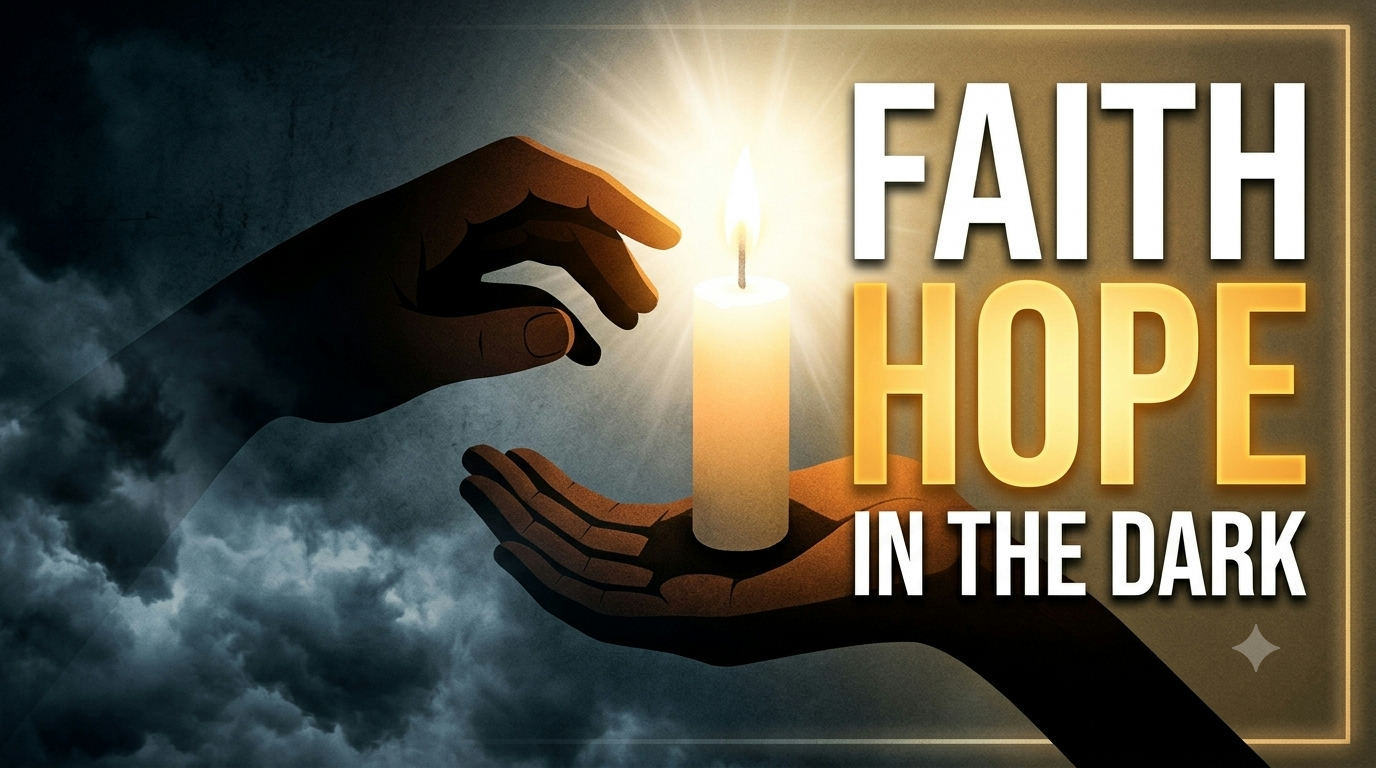
Faith and hope are not the same word wearing different clothes. Collapsing them into one vague idea is exactly why so many people feel stuck when life gets hard. You pray, you try to believe, and nothing shifts. Understanding the specific difference between faith & hope is not a theological exercise. It is the first practical tool you need when circumstances feel impossible.
This is not about feeling more positive. It is about knowing which anchor you are holding, which one you have dropped, and what to do next. The Bible treats faith and hope as distinct instruments. When you know how each one works, you can use them even on the days you feel neither.
Key Takeaways
- Write down one sentence of faith and one sentence of hope separately — 'God is good right now' and 'This is not the end' — and keep them somewhere you will see them on the hardest days.
- When hope collapses first, go back to what you know about God's character before you try to rebuild the future picture. Faith in who God is can hold you until hope returns.
- Find one biblical figure who faced what you are facing — Job, David in the Psalms, Paul in prison — and read the verses where they named their despair out loud. Honest prayer is not weak faith.
- Use a study tool like Selah to trace a word like 'hope' or 'trust' through its original Hebrew or Greek meaning. What you find in the source language often says more than the English translation alone.
- Choose one short passage about hope — Romans 5:3-5 or Lamentations 3:21-23 — and read it every morning for one week. Repetition is how truth moves from the head to the place where you actually need it.
On this pageFaith and Hope Are Not the Same Thing (and the Difference Matters)What Biblical Hope Actually Is (It Is Not Optimism)Three Biblical Figures Who Held On When Everything Said Let GoWhat to Do When You Cannot Feel Either Faith or Hope
Faith and Hope Are Not the Same Thing (and the Difference Matters)
Faith is trust in who God is right now. Hope is confidence in what God will do. Hebrews 11:1 makes this precise: faith is 'the substance of things hoped for.' Faith is the present grip. Hope is the future object. They work together, but they are not interchangeable, and treating them as one word costs you a tool.
Here is a way to feel the difference in real life. Faith says: 'God is good even today, in this hospital room, in this empty bank account.' Hope says: 'This is not the end of my story.' One is about now. One is about what is coming. You need both, but they do different jobs.
When life falls apart, most people lose hope first. The future starts to look sealed. But faith can survive longer than hope, because faith is rooted in God's character, which does not change with your circumstances. And here is the key: faith is what keeps hope alive until something shifts. If you know which one you have lost, you know exactly where to start rebuilding.
Start by asking yourself one honest question: Do I still believe God is good right now, even if nothing changes? If yes, your faith is intact. If no, that is where to begin. If you believe God is good but cannot see any future in your situation, your hope is the one that needs attention. The diagnosis matters.
What Biblical Hope Actually Is (It Is Not Optimism)
Biblical hope is not a feeling. It is not fingers crossed. The Greek word elpis, used throughout the New Testament, means a confident expectation based on a reliable promise. It is closer to certainty about the future than to wishing things will improve.
Optimism depends on circumstances looking manageable. Biblical hope does not. Romans 8:24-25 says hope that is seen is not hope at all. Real biblical hope, by definition, operates in the dark. It is anchored to God's character and God's promises, not to whether your situation is trending upward.
This distinction changes how you act. If you treat hope as a feeling, you will wait until you feel hopeful before you do anything. You will stay in bed, stop praying, stop reaching out. But if you treat hope as a decision anchored to a specific promise, you can act before the feeling arrives. The action does not require the emotion to come first.
Pick one promise and hold it concretely. Not 'God is good in general,' but a specific verse you can return to when the feeling is gone. Romans 15:13 is a good starting point: 'May the God of hope fill you with all joy and peace as you trust in him.' Notice that hope is described as something God fills you with. It can be received, not only generated.
Three Biblical Figures Who Held On When Everything Said Let Go
Job: Faith Without Answers
Job lost his children, his health, and his income inside a few days. He never received an explanation. What he held was not certainty about outcomes. It was certainty about God's existence and justice, even when both seemed absent. His famous line in Job 13:15, 'Though he slay me, yet will I trust him,' is not resignation. It is faith stripped of every comfort except the character of God. If you are in a situation with no resolution in sight, Job is your entry point.
Jeremiah: Hope in a Burning City
Jeremiah wrote Lamentations while Jerusalem burned around him. Chapter 3 hits rock bottom by verse 18: 'My splendor is gone and all that I had hoped from the Lord.' Then verse 21 pivots: 'Yet this I call to mind, and therefore I have hope.' He did not wait for his feelings to change. He made a deliberate mental act. He chose to recall something true when everything visible was false. That phrase, 'I call to mind,' is a technique, not a mood.
Paul: Contentment That Is Not Denial
Paul wrote about contentment from prison. Philippians 4:11-13 is not a prosperity claim. He was not saying circumstances were fine. He was saying his inner state was no longer controlled by outer conditions, and he described this as something he had 'learned.' It was a practiced skill, not a personality trait. If you are someone who tends to tie your emotional state tightly to what is happening around you, Paul's framing is the one to study.
Each figure offers a different entry point. Job models raw faith when you have no answers. Jeremiah models the mental act of recalling a truth. Paul models practiced detachment from outcomes. Find the one that fits your current situation and read that book in full context before moving on.
What to Do When You Cannot Feel Either Faith or Hope
Feeling is not the measure of faith or hope. Scripture describes both as anchors, not emotions. An anchor holds whether you feel it or not. The problem is that most people wait for the feeling to return before they act, and that wait can stretch into months.
- Stop trying to manufacture a feeling. That effort usually produces guilt, not faith. Set it down.
- Make one small act of trust. Read one promise aloud. Write one sentence about what you know to be true about God's character, not what you feel about it.
- Use memory as evidence. Jeremiah's pivot was 'I call to mind.' Think of one specific moment in your past when God came through. That is not nostalgia. That is data.
- Pray one honest sentence rather than a polished prayer. 'I don't feel anything but I am still here' is a legitimate prayer.
- If you cannot pray at all, find someone who can pray for you. Romans 15:13 frames hope as something God fills you with. It can come through another person's faith when yours is depleted.
Frequently asked questions
What is the difference between faith and hope in the Bible?
Faith is present-tense trust in who God is right now. Hope is forward-facing confidence in what God has promised to do. Hebrews 11:1 describes faith as 'the substance of things hoped for,' meaning faith is the grip and hope is the object being held. They work together, but losing one does not automatically mean you have lost the other.
Can you have faith without hope, or hope without faith?
You can experience one while the other is weak, but neither thrives alone for long. A person can hold onto God's character (faith) even when the future looks completely sealed off (collapsed hope), and that is often exactly what happens in the darkest seasons. Hope without any faith tends to become wishful thinking rather than biblical confidence. The two are designed to reinforce each other.
Is biblical hope the same as optimism?
No. Optimism is a temperament — some people are wired for it and some are not. Biblical hope is a reasoned confidence grounded in specific promises and a track record. Romans 5:4 connects hope to 'proven character,' meaning it is built through tested experience, not positive thinking. You do not have to feel cheerful to hold biblical hope.
What does the Bible say to do when you feel completely hopeless?
The Psalms model the most direct answer: name the despair out loud to God before you try to resolve it. Psalm 88 ends without resolution and is still Scripture. Lamentations 3 moves from raw grief to 'yet I will hope in him' in the same chapter. The pattern is honesty first, then a deliberate act of remembering what God has done — not forcing a feeling, but choosing a direction.
How did Job maintain faith when God didn't answer him?
Job did not maintain tidy faith — he argued, accused, and demanded an answer. What he refused to do was walk away. Job 13:15 captures it: 'Though he slay me, yet will I trust in him.' His faith survived not because circumstances improved but because he kept directing his anger and grief toward God rather than away from him. That distinction matters for anyone in a long silence.
What are the three theological virtues and why are faith, hope, and love grouped together?
Faith, hope, and love are called theological virtues because they are directed toward God rather than earned through human effort. Paul groups them in 1 Corinthians 13:13 and 1 Thessalonians 1:3 because each one does a different job: faith connects you to God now, hope orients you toward what God has promised, and love is the active expression of both. They are not a ranked list — Paul says love is greatest because it outlasts the other two into eternity, not because faith and hope matter less in this life.
Study Faith and Hope Word by WordSelah gives you free access to the Strong's interlinear reader, biblical character profiles, and Matthew Henry's commentary — so you can trace every verse on faith and hope back to the original Hebrew and Greek, no subscription required.Start studying free →
Comments
Be the first to comment.