What Does It Mean to Have Living Faith as a Christian
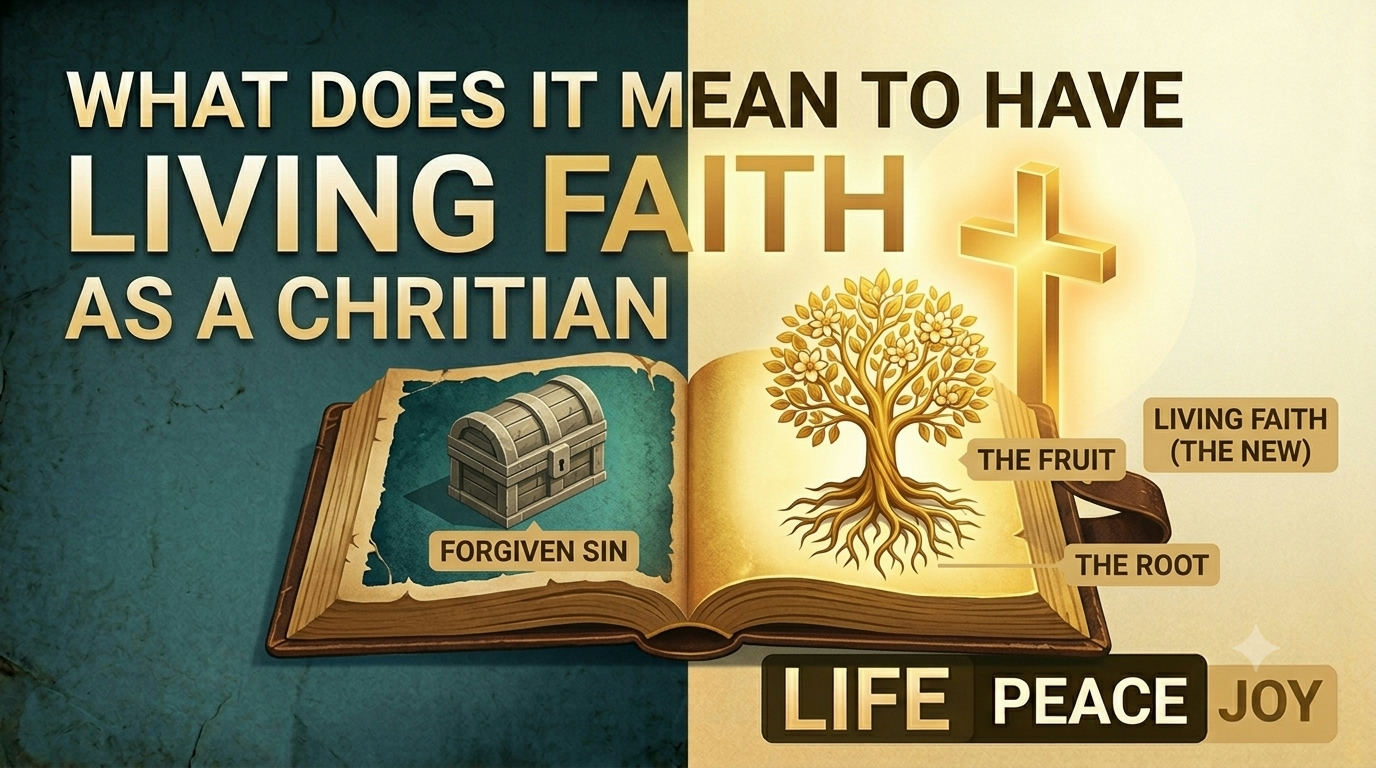
What Does It Mean to Have Living Faith as a Christian
Faith & hope are two of the most used words in Christianity and two of the least understood in practice. Most people can quote a verse about them. Fewer know what to do with them on a Wednesday when the diagnosis comes back bad, the account is overdrawn, and prayer feels like leaving a voicemail no one checks.
This is about the gap between knowing the words and actually living them. What does living faith mean in the Christian life? Not in theory. In the specific, uncomfortable, ordinary moments where belief either holds or it doesn't.
Key Takeaways
- Pick one biblical character from Scripture whose life included prolonged suffering — Job, Joseph, David, Hannah — and read their story this week specifically looking for how they expressed both trust in God and expectation of his action. Notice where they held both at once and where they lost one or the other.
- When doubt surfaces, write it down as a specific sentence rather than letting it stay a vague feeling. Then find one verse that speaks directly to that exact fear and read it aloud. Naming the doubt and naming the promise are both acts of faith.
- If your faith has been mostly intellectual — correct beliefs held at a distance — choose one concrete act this week that only makes sense if God is actually real and active: a prayer you commit to for 30 days, a decision you make based on a promise rather than circumstances, a conversation you have because you believe God is working in someone's life.
- Use Selah to look up the original Hebrew or Greek word behind a verse about faith or hope that has felt flat to you. Reading what the word actually meant to its first audience often breaks open a passage that familiarity had closed down.
- Stop measuring your faith by how certain you feel and start measuring it by what you do when you are uncertain. Living faith shows up in action under pressure, not in the absence of doubt.
On this pageFaith and Hope Are Not the Same Thing (and the Difference Matters)What Living Faith Actually Looks Like on a Hard Tuesday MorningHow Hope Keeps You Moving When Faith Feels ThinThe Moment Faith Becomes Works: Recognizing the ShiftHow to Study Faith and Hope in Scripture Without Getting LostWhat Faith and Hope Demand From You in Specific Hard Situations
Faith and Hope Are Not the Same Thing (and the Difference Matters)
Faith is trust placed in a person, specifically God, based on what he has already done. Hope is confident expectation of what he has promised to do. One looks back. The other looks forward. Both are required. Neither replaces the other.
Hebrews 11:1 is the classic text: faith is the 'substance of things hoped for.' That phrasing is precise. Faith is the ground hope stands on. Without faith underneath it, hope is just wishful thinking, the kind that evaporates when circumstances get hard enough.
A practical way to feel the difference: faith says 'God is faithful.' Hope says 'therefore, my situation will not end here.' You need both sentences. The first one anchors the second. If you only have the second, you're optimistic. If you only have the first, you may believe correct things about God without expecting him to act in your actual life.
Most people in a crisis collapse hope first, then faith. The situation looks permanent, so the expectation of change dies, and eventually the trust underneath it starts to crack too. Knowing which one is slipping helps you know what to pray for and where to look in Scripture. GotQuestions puts it well: faith and hope are distinct but inseparable, like a foundation and the structure built on it. Start by asking yourself honestly: is it my trust in God that's wavering, or my expectation that things can change?
What Living Faith Actually Looks Like on a Hard Tuesday Morning
Living faith is not a feeling. It is a choice to act as though God's word is true before you feel any confirmation that it is. James 2:17 is plain about this: faith without works is dead. Dead. Not weak, not developing. Dead.
Here's a concrete scenario. You're behind on rent, anxious, and your prayer feels like talking to a wall. Living faith in that moment is not a sudden surge of peace. It's making the call you've been avoiding, asking for help you're embarrassed to ask for, and doing the next right thing while telling God you trust him with the outcome. The action comes first. The confirmation follows, if it comes at all before the situation resolves.
The gap most Christians fall into is waiting to feel faith before they act on it. Scripture consistently shows the opposite order. The ten lepers in Luke 17:14 were healed 'as they went,' not before they moved. They took the step while still sick. The feeling, the evidence, the relief came after obedience, not before it.
Living faith is also honest. It does not perform calm it doesn't have. Psalms 22 and 88 are raw, frightened prayers. Psalm 22 opens with 'My God, my God, why have you forsaken me?' That's in the Bible. That's Scripture. Honesty with God is not the opposite of faith. It is faith speaking plainly. If you're afraid, say so. Then take the next step anyway.
How Hope Keeps You Moving When Faith Feels Thin
Hope in the biblical sense is not optimism. It is a reasoned expectation grounded in God's track record. Romans 5:3-5 traces a specific chain: suffering produces perseverance, perseverance produces character, character produces hope. Hope is the end product of endurance, not the starting point. You don't begin with it. You arrive at it.
When faith feels thin, when you can't feel God and the verse isn't landing, hope is what you lean on. It says: I have seen him be faithful before. I have read of others who waited and were not abandoned. I will wait. That's not passive. That's a decision made against the current of despair.
Practically, this means keeping a short record of answered prayers. Specific moments when things turned. Not a journal for its own sake, but evidence you can return to when doubt is loudest. That list is hope made concrete. When you can't feel anything, you can read what you know to be true from your own history with God.
Hebrews 6:19 gives hope an anchor image. An anchor doesn't stop the storm. It stops the drift. Hope doesn't promise your situation resolves quickly. It keeps you from being swept into despair while you wait. Write down three specific times God came through for you. Keep that list somewhere you'll actually see it.
The Moment Faith Becomes Works: Recognizing the Shift
James 2 is often read as a contradiction of Paul. It isn't. Paul says you are saved by faith, not works. James says real faith produces works. You can tell the difference between living faith and dead belief by what it moves you to do. They're describing the same thing from two angles.
Dead belief: you know God is sovereign, but you don't pray because you assume nothing will change. Living faith: you know God is sovereign, so you pray specifically, expecting a real answer. The theology is identical. The posture is completely different.
- You talk about trusting God but make every decision from pure anxiety, with no prayer in the process.
- You read Scripture regularly but can't name a single behavior it has changed in the last month.
- You say you believe God provides, but generosity has quietly disappeared from your life.
These aren't signs you're a bad Christian. They're diagnostic. If your faith isn't producing any movement, any prayer, any obedience, any risk taken on God's word, it's worth asking what you actually believe, not just what you say you believe. Pick one of those three and sit with it this week.
How to Study Faith and Hope in Scripture Without Getting Lost
The words 'faith' and 'hope' carry more weight in the original languages than most English translations show. The Greek word for faith, pistis, means trust and faithfulness together. It's relational, not just intellectual. The Hebrew word for hope, qavah, means to wait with expectation, like a rope pulled taut under tension.
Studying those original words changes how you read familiar verses. Hebrews 11:1 hits differently when you know pistis implies loyalty, not just belief. You're not just agreeing with facts about God. You're committing to him, the way a person commits to another person, not the way a student agrees with a textbook.
A free way to do this: Selah has a Strong's interlinear reader that maps every English word to its Hebrew or Greek root, with concordance numbers. You can look up every verse where pistis or elpis (the Greek word for hope) appears and read them in context, without buying software or knowing Greek. The Selah Bible dictionary also pulls from Easton's and Smith's classical dictionaries, so you get the historical and theological weight of a term alongside the verse list.
Start with the word, not the verse. Trace pistis through the New Testament. Watch how Paul uses it differently than James uses it, and then notice they're not contradicting each other at all. That pattern teaches you more than any single verse can.
What Faith and Hope Demand From You in Specific Hard Situations
When You're Afraid and Can't Feel God
Living faith in fear doesn't mean suppressing the fear. It means bringing it directly to God and then taking the next obedient step anyway. Psalm 56:3 is a model: 'When I am afraid, I put my trust in you.' Notice the sequence. Fear first, then trust. Not trust instead of fear. The fear is named. Then the choice is made.
When You're Doubting Whether Any of This Is True
Doubt is not the opposite of faith. Unbelief is. Doubt asks questions. Unbelief refuses to listen to the answers. If you're doubting, you're still engaged, still in the conversation. Bring the doubt into your Bible reading. Ask the hard question directly and look for where Scripture has already wrestled with it. The Psalms, Job, and Lamentations are full of people who doubted loudly and were not abandoned for it.
When You've Prayed and Nothing Has Changed
This is where hope does its hardest work. The biblical pattern is not 'pray once and receive immediately.' Abraham waited decades for the son God promised. Joseph spent years in prison after doing the right thing. The waiting is not evidence that God isn't listening. It is often the very process by which faith is being built, tested, and deepened.
Name it before you pray it. Vague faith produces vague results. Before you pray, write down the specific fear, the specific doubt, or the specific request. One sentence. Then pray that sentence. Specificity is how you move from believing in faith as a concept to actually exercising it. Keep a running list of specific prayers and dates. That list becomes your evidence when hope needs something to stand on.
In each of these situations, the practical move is the same: get specific. Name the fear. Name the doubt. Name the prayer. Generality is where faith goes to stay comfortable and do nothing.
Faith and hope are not feelings you wait for. They are postures you choose, again and again, in the specific moments when everything in you wants to choose something easier. The more you practice naming what's true about God before you feel it, the more your actions start to match what you say you believe. That's not a formula. That's what the whole of Scripture shows, in person after person who waited, acted, and found God faithful on the other side.
Frequently asked questions
What is the difference between faith and hope in the Bible?
Faith is trust placed in God based on what he has already done and revealed. Hope is confident expectation of what he has promised to do next. Hebrews 11:1 captures the relationship precisely: faith is the substance, or ground, that hope stands on. You can read a detailed breakdown of the two words at GotQuestions.
Can you have hope without faith, or faith without hope?
Technically you can have one without the other, but neither works well alone. Hope without faith underneath it is just optimism — it collapses when circumstances get hard enough. Faith without hope can become a cold, correct theology that never expects God to act in your actual life. The two are designed to work together, which is why Paul lists them alongside love in 1 Corinthians 13:13 at BibleHub.
Is doubt a sin, or is it a normal part of the Christian life?
Doubt is not the same as unbelief. Unbelief is a settled refusal to trust God. Doubt is uncertainty that is still reaching toward him. Thomas doubted and Jesus met him in it. The Psalms are full of writers who questioned God openly and were not condemned for it. The problem is not having the question — it is stopping there and never bringing it to God.
How do I know if my faith is living or just intellectual belief?
Living faith produces action, even small action, under conditions where you would not act if you did not believe God was real. Intellectual belief stays comfortable and costs nothing. A simple test: think of one decision you have made in the last month that only made sense because you trusted God's promise rather than what you could see. If you cannot think of one, that is useful information, not condemnation — it is a starting point.
What should I do when prayer feels unanswered for a long time?
Keep praying, and change what you pray for. Persistent prayer in Scripture is not about wearing God down — it is about staying in relationship with him long enough to have your own desires shaped by his. Read the prayers of people like Daniel, Paul, and the Psalms writers to see how they held expectation and honesty together. Studying those prayers in their original context, including the Hebrew and Greek words behind them, can shift how you hear your own silence.
How do I study the original Greek and Hebrew words for faith and hope without knowing those languages?
You do not need to learn either language to use the tools. Selah offers a Strong's interlinear reader that maps every word in Scripture to its Hebrew or Greek root, with definitions, so you can see exactly what a word meant in its original context. Start with the Greek word pistis (faith) or elpis (hope) and trace how each one is used across the New Testament — the pattern across multiple passages tells you more than any single definition.
Study Faith and Hope in the Original WordsSelah gives you a free Strong's interlinear reader, 272+ biblical character profiles, and Matthew Henry's commentary — everything you need to go deeper on faith and hope without paying for software.Start studying free →
Comments
Be the first to comment.