Who Were the Nephilim? The Bible's Most Mysterious Giants Explained
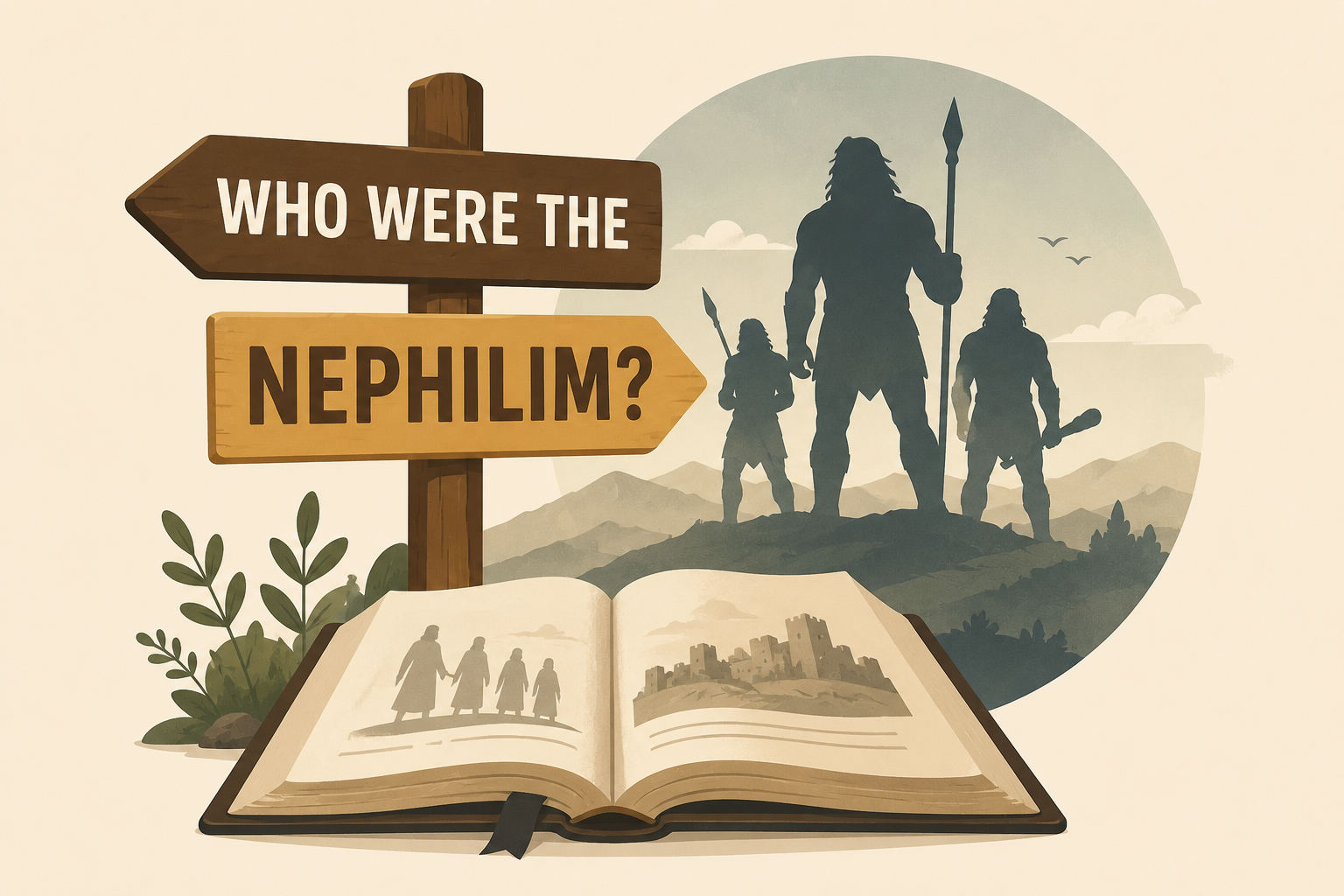
Few passages in the Bible have generated more questions than Genesis 6.
It is only four verses long.
Yet those four verses have inspired thousands of books, sermons, documentaries, and debates.
The passage introduces a mysterious group called the Nephilim.
Who were they?
Were they giants?
Were they the children of fallen angels?
Were they powerful rulers?
Or has the entire passage been misunderstood?
The mystery surrounding the Nephilim has fascinated readers for centuries because the Bible says surprisingly little about them while hinting at something extraordinary.
Understanding who the Nephilim were requires looking carefully at what Scripture actually says—and what it does not say.
Key Takeaways
The Nephilim are first mentioned in Genesis 6:1-4.
The Bible describes them as mighty men and men of renown.
There are several major interpretations of their identity.
Scripture never fully explains every detail about them.
The Nephilim appear again briefly in the Book of Numbers.
Understanding Genesis 6 helps explain why this topic remains debated.
On This Page
What Does the Word Nephilim Mean?
The Strange Passage in Genesis 6
The Three Major Theories About the Nephilim
Were the Nephilim Giants?
Why the Nephilim Appear Again After the Flood
What the Bible Clearly Says—and Doesn't Say
Why This Topic Matters Today
Frequently Asked Questions
What Does the Word Nephilim Mean?
The word "Nephilim" appears only a few times in Scripture.
Many Bible translations leave the Hebrew word untranslated because scholars disagree on its precise meaning.
Some believe it comes from a Hebrew root meaning:
"to fall."
This has led to the popular idea that the Nephilim were "fallen ones."
Others argue the word may simply describe powerful warriors or unusually large individuals.
What makes interpretation difficult is that Scripture never pauses to define the term.
The biblical authors appear to assume their audience already understood who the Nephilim were.
Concrete Next Step
Read Genesis 6:1-4 slowly and write down every fact the passage explicitly states before considering any theories.
The Strange Passage in Genesis 6
Genesis 6 says:
"The sons of God saw that the daughters of men were beautiful, and they took wives for themselves."
Then the text says:
"The Nephilim were on the earth in those days."
Immediately, readers encounter two major questions:
Who are the "sons of God"?
Who are the Nephilim?
The passage occurs immediately before the account of Noah's Flood.
This placement suggests the events described were part of the increasing corruption of humanity.
Yet Genesis provides very few details.
That brevity is one reason debates continue today.
Concrete Next Step
Read Genesis chapters 4–6 together to see how the Nephilim account fits into the larger story of human corruption before the Flood.
The Three Major Theories About the Nephilim
Theory 1: Fallen Angels
This is perhaps the most famous interpretation.
According to this view, the "sons of God" were angelic beings who interacted with human women.
Supporters point to passages where "sons of God" appears to refer to heavenly beings.
Under this interpretation, the Nephilim were the offspring of these unions.
This theory became especially popular in some ancient Jewish writings.
Theory 2: The Sethite View
Another interpretation identifies the "sons of God" as descendants of Seth, Adam's godly son.
The "daughters of men" are viewed as descendants of Cain.
The passage would then describe the mixing of godly and ungodly lineages.
This view became popular among many Christian theologians because it avoids supernatural explanations.
Theory 3: Powerful Human Rulers
A third interpretation sees the "sons of God" as ancient kings or rulers.
In the ancient world, rulers were sometimes described with divine language.
According to this view, Genesis condemns powerful leaders who abused authority and took women for themselves.
The Nephilim would then be famous warriors or tyrants.
Concrete Next Step
Compare the strengths and weaknesses of each interpretation and ask which view best fits the overall context of Scripture.
Were the Nephilim Giants?
Many readers associate the Nephilim with giants.
The reason comes primarily from Numbers 13:33.
When Israel's spies entered Canaan, they reported:
"We saw the Nephilim there."
The spies also described themselves as looking like grasshoppers by comparison.
This passage strongly suggests unusual size.
However, there is an important detail.
The spies were delivering a fearful report.
Some scholars argue they may have exaggerated what they saw.
Even so, the Bible clearly connects the Nephilim with extraordinary strength and reputation.
Concrete Next Step
Read Numbers 13 and compare the spies' report with God's response to determine how reliable their observations were.
Why Do the Nephilim Appear Again After the Flood?
One of the biggest challenges for interpreters is this:
If the Flood destroyed humanity except for Noah's family, why do Nephilim appear later?
Several explanations exist:
The term may have been reused for giant clans after the Flood.
The spies may have used "Nephilim" as a comparison rather than a literal identification.
The same conditions described in Genesis 6 may have occurred again.
Scripture does not explicitly answer the question.
This is one reason scholars continue to debate the topic.
What the Bible Clearly Says—and Doesn't Say
The Bible clearly says:
The Nephilim existed.
They lived before the Flood.
They were considered mighty men.
They had a reputation for greatness.
Their presence was associated with a period of increasing corruption.
The Bible does not clearly say:
Their exact origin.
Their precise height.
Whether they were partly angelic.
Whether every later giant descended from them.
Recognizing the difference between what Scripture says and what people speculate is essential.
Concrete Next Step
Separate confirmed biblical facts from popular theories. This exercise often reveals how much of the discussion comes from tradition rather than Scripture.
Why This Topic Matters Today
The fascination with the Nephilim often comes from curiosity.
People love mysteries.
But Genesis 6 is not primarily about giants.
It is about human corruption reaching a crisis point.
The focus of the chapter quickly shifts away from the Nephilim and toward Noah.
That shift is important.
The Bible's emphasis is not on explaining every mystery.
Its emphasis is on God's plan of redemption.
The Nephilim may be mysterious.
Noah is the main point.
The chapter ultimately directs readers toward God's judgment of evil and His preservation of righteousness.
Frequently Asked Questions
Who were the Nephilim?
The Nephilim were mysterious figures mentioned in Genesis 6 and Numbers 13. Their exact identity remains debated among biblical scholars.
Were the Nephilim giants?
They are often associated with giants because of Numbers 13:33, though Scripture does not provide precise measurements.
Were the Nephilim fallen angels?
Some interpreters believe the Nephilim were connected to fallen angels, while others reject this view and favor human explanations.
What does Nephilim mean?
The Hebrew term may be related to the concept of "falling," but scholars disagree on its exact meaning.
Did the Nephilim survive the Flood?
The Bible does not explicitly state that they survived. Their later appearance in Numbers is one of the major interpretive challenges.
Why does the Bible mention the Nephilim?
The Nephilim help set the stage for the growing corruption of the world before the Flood and highlight the context in which God called Noah.
Comments
Be the first to comment.