Why Does God Allow Suffering? A Biblical Answer to Life's Hardest Question
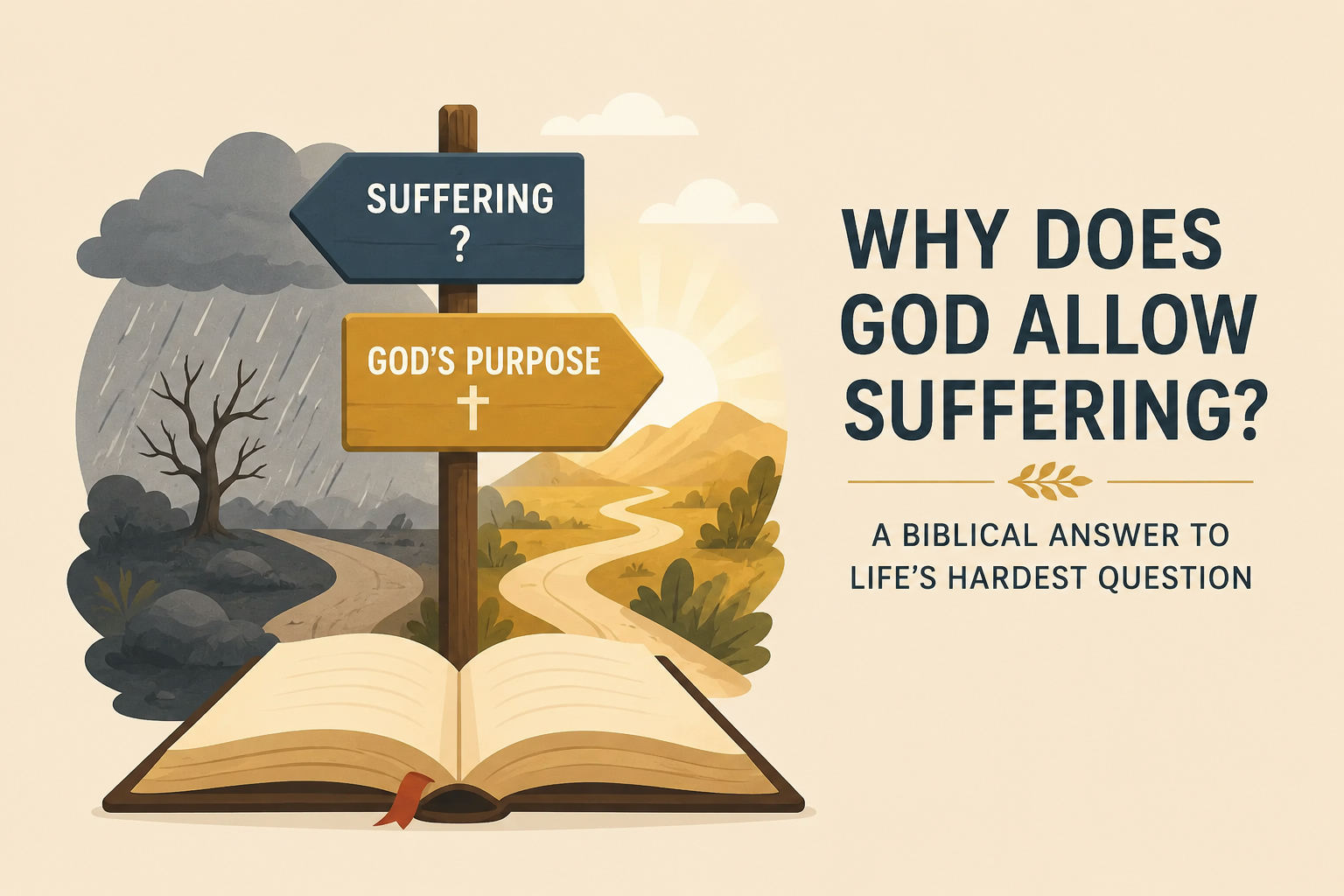
Why Does God Allow Suffering? A Biblical Answer to Life's Hardest Question
If God is good, why does suffering exist?
That question has followed humanity for thousands of years. It appears in hospital rooms, funeral homes, broken marriages, natural disasters, and quiet moments when prayer seems to go unanswered.
For many people, suffering is not an intellectual problem. It is personal.
A child dies.
A diagnosis arrives.
A relationship falls apart.
A prayer receives silence instead of the answer you expected.
And suddenly the question becomes urgent:
"If God loves me, why would He allow this?"
The Bible does not ignore that question. In fact, some of its most faithful followers asked it repeatedly.
Job asked it.
David asked it.
Jeremiah asked it.
Even Jesus cried out from the cross.
The surprising thing is that Scripture rarely responds with a simple explanation. Instead, it offers something deeper: a framework for understanding suffering without losing faith.
The answer begins by recognizing that suffering was never part of God's original design.
Key Takeaways
The Bible teaches that suffering entered the world through sin, not through God's original creation.
God allows suffering, but He does not delight in it.
Some suffering is the result of human choices; some remains unexplained.
Scripture consistently shows God working through suffering to accomplish greater purposes.
Jesus Himself experienced suffering, making Christianity unique among world religions.
The Bible promises that suffering is temporary, but God's redemption is eternal.
On This Page
Where Suffering Came From According to the Bible
Why God Doesn't Eliminate All Suffering Immediately
The Book of Job and the Limits of Human Understanding
What Jesus Reveals About Suffering
Five Purposes God Can Accomplish Through Pain
Why Some Questions Remain Unanswered
The Future Hope That Changes Everything
Frequently Asked Questions
Where Suffering Came From According to the Bible
One of the most common misconceptions is that God created suffering.
The Bible says otherwise.
Genesis 1 repeatedly describes creation as "good."
There was no death.
No disease.
No injustice.
No suffering.
The world God created functioned exactly as intended.
The turning point comes in Genesis 3.
Humanity chose independence from God, and sin entered creation. The result was not merely spiritual separation but a fracture that spread through every part of life.
Pain entered relationships.
Death entered humanity.
Creation itself became broken.
Romans 8 describes creation as "groaning" under this burden.
This means suffering is not evidence that God failed.
It is evidence that something in creation is not operating the way it was originally designed.
Concrete Next Step
Read Genesis 1–3 in one sitting. Notice the dramatic contrast between the world before and after sin enters the story.
Why God Doesn't Eliminate All Suffering Immediately
If God is all-powerful, why doesn't He simply remove suffering today?
At first glance, the answer seems obvious.
But consider what would be required.
Much suffering comes from human choices.
Violence.
Greed.
Abuse.
Dishonesty.
Pride.
To eliminate all suffering instantly, God would have to eliminate every sinful choice before it occurred.
That raises another question:
Would genuine freedom still exist?
The Bible presents a God who values real love, and real love requires real choice.
Without freedom, obedience would be programming rather than relationship.
God allows human freedom, even when humans misuse it.
That does not mean He approves of evil.
It means He permits choices while working toward ultimate justice.
Concrete Next Step
Make a list of situations where human decisions directly contribute to suffering. Notice how much pain originates from choices rather than natural causes.
The Book of Job and the Limits of Human Understanding
No biblical book wrestles with suffering more directly than Job.
Job loses:
His wealth
His children
His health
His reputation
His friends insist there must be a simple explanation.
Maybe Job sinned.
Maybe God is punishing him.
Maybe he deserves it.
The reader knows none of those explanations are true.
What makes Job remarkable is that God never fully explains why the suffering happened.
Instead, God reveals something about Himself.
The message is profound:
You may not understand everything God is doing, but you can trust the One doing it.
Job's greatest need was not information.
It was perspective.
The book reminds readers that limited human understanding cannot always evaluate infinite wisdom.
Concrete Next Step
Read Job chapters 38–42 and pay attention to how God's response focuses on His character rather than detailed explanations.
What Jesus Reveals About Suffering
Christianity is unique because God does not remain distant from suffering.
He enters it.
Jesus experienced:
Rejection
Betrayal
Mockery
Physical pain
Grief
Death
This changes everything.
The Christian answer to suffering is not merely philosophical.
It is personal.
God understands suffering because He has experienced it firsthand.
Isaiah 53 calls Jesus "a man of sorrows, acquainted with grief."
Hebrews 4:15 says He sympathizes with human weakness.
The cross demonstrates that God can bring redemption from the darkest circumstances imaginable.
If God transformed the crucifixion into the salvation of the world, He can also work through suffering in ways we cannot yet see.
Concrete Next Step
Read Isaiah 53 and note every description of suffering applied to the coming Messiah.
Five Purposes God Can Accomplish Through Pain
The Bible never says every suffering experience has the same purpose.
But Scripture repeatedly shows God using pain in meaningful ways.
1. Suffering Reveals What We Trust
Difficult seasons expose where our confidence truly rests.
Comfort often hides weaknesses that hardship reveals.
2. Suffering Produces Spiritual Growth
James 1:2-4 teaches that trials develop perseverance and maturity.
Growth rarely happens during easy seasons.
3. Suffering Deepens Dependence on God
Paul's "thorn in the flesh" taught him that God's strength becomes most visible in weakness.
4. Suffering Equips Us to Help Others
2 Corinthians 1 teaches that comfort received from God becomes comfort we can share.
People who have suffered often become the most compassionate helpers.
5. Suffering Redirects Our Focus Toward Eternity
Pain reminds us that this world is not our final home.
It creates a longing for the restoration God promises.
Concrete Next Step
Ask yourself: "What has this difficult season taught me that comfort never could?"
Why Some Questions Remain Unanswered
One of the hardest truths in Scripture is that not every question receives a complete answer.
Some suffering appears understandable.
Other suffering seems completely mysterious.
The Bible never promises that believers will understand every event in this life.
Deuteronomy 29:29 says:
"The secret things belong to the Lord."
Faith is not having every answer.
Faith is trusting God even when some answers remain hidden.
This is uncomfortable.
But it is also realistic.
A finite mind cannot fully comprehend an infinite God.
Concrete Next Step
Write down one unanswered question you still carry. Instead of demanding an explanation, spend time reflecting on what God's character says about that situation.
The Future Hope That Changes Everything
The Bible's ultimate answer to suffering is not found in this life.
It is found in the next.
Revelation 21 describes a future where:
Death is gone
Pain is gone
Tears are gone
Mourning is gone
God's final plan is not merely to help people endure suffering.
It is to eliminate suffering forever.
Christian hope rests in restoration.
The story of Scripture begins in a perfect garden.
It ends in a restored creation.
Everything broken will ultimately be made new.
The promise is not that suffering wins.
The promise is that God wins.
Concrete Next Step
Read Revelation 21–22 and underline every promise describing God's future restoration.
What This Means for You Today
Suffering often creates two temptations.
The first is believing God has abandoned you.
The second is believing suffering serves no purpose.
The Bible rejects both conclusions.
God remains present in suffering.
And He remains capable of working through it.
You may not see the purpose immediately.
Job didn't.
Joseph didn't.
David didn't.
Even Jesus' followers did not understand Good Friday until they reached Easter morning.
Faith does not require understanding everything.
It requires trusting God while understanding remains incomplete.
Frequently Asked Questions
Does God cause suffering?
The Bible teaches that suffering entered the world through sin. While God may permit suffering, Scripture does not portray Him as delighting in human pain.
Why do bad things happen to good people?
According to Scripture, no one lives in a world untouched by the effects of sin. Suffering is part of a broken creation and affects both believers and unbelievers.
Does suffering mean God is punishing me?
Not necessarily. The Book of Job directly challenges the assumption that suffering always results from personal sin.
Why did Jesus have to suffer?
Jesus suffered to accomplish humanity's redemption and demonstrate God's love. His suffering made forgiveness and reconciliation possible.
Can God bring good out of suffering?
Romans 8:28 teaches that God works in all things for the good of those who love Him. This does not mean suffering itself is good, but that God can redeem it.
What is the Christian hope in suffering?
The Christian hope is that suffering is temporary, God's presence is constant, and ultimate restoration is coming through Jesus Christ.
How should Christians respond to suffering?
Christians are called to trust God, seek Him honestly, support one another, and remember that suffering does not have the final word.
The Bible never minimizes suffering. It acknowledges its pain, its confusion, and its weight. Yet Scripture consistently points beyond suffering to a God who enters it, works through it, and ultimately defeats it.
The question is not whether suffering exists.
The question is whether suffering gets the last word.
According to the Bible, it does not.
Resurrection does.
Comments
Be the first to comment.